Outdoor Cannabis Pests: Chewed Leaves and Plant Recovery Timeline
Chewing damage escalated
The plant moved from old cosmetic chew marks to active ongoing leaf loss, so a protective intervention is now warranted.
Observation
12 June 2026
- Plant
- Cannabis (RQS Gushers)
- Health
- 😕 Stressed but growing
- Momentum
- Damage is spreading
- Case decision
- Open Case
Visual evidence
What Dud2Bud observed
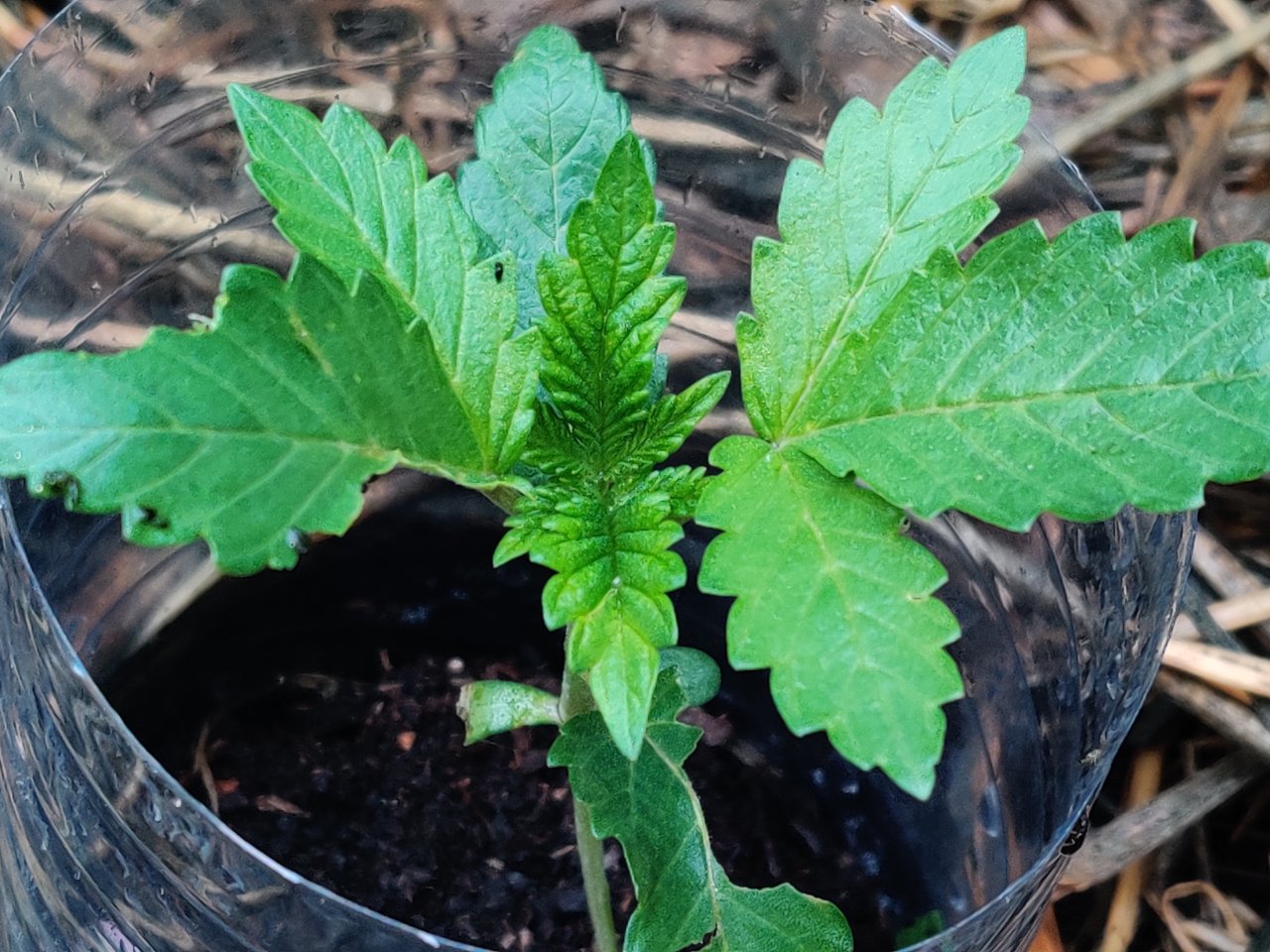
Compared with the baseline, the plant has clear new chewing damage. The plant is still alive and growing, but the injury is active enough to justify a simple protective intervention today.
Center growth is still pushing new leaves
Most foliage remains green
Plant posture is upright
Fresh chewing and cut tissue are visible
Damage is on more than one leaf
User reports additional leaves found on the ground
Active new damage
Fresh holes and missing edges on the left and right leaves
Active new damage
A small dark puncture-like mark on a leaf
Active new damage
User-reported recent leaf pieces on the ground
Old damage
Older minor nicks from the first photo that are unchanged
Old damage
Small cosmetic edge wear on already expanded leaves
Still uncertain
The exact pest or animal is not visible
Still uncertain
Whether damage happened in one event or over several feeding visits
Dud2Bud decision
Stop the chewing
New visible tissue loss plus user-reported fallen leaf pieces means the plant needs protection now, not just observation.
What to do
Shield the plant from chewing
Place a simple physical barrier or cover around the plant today so the chewing source cannot keep removing leaf tissue. Keep watering and light the same.
- 1 Put the plant behind a barrier or cover today.
- 2 Check the ground for fresh fallen pieces and note whether they stop appearing.
- 3 Leave watering and placement otherwise unchanged for now.
Exact change
Add a fine mesh or cloche-like barrier around the plant, or move the pot to a protected spot where chewing access is blocked.
Keep steady
Keep the pot, soil, watering, and light conditions unchanged while you protect the plant.
Check your own plant
Does your plant look similar?
Upload one photo. Dud2Bud looks at the visible symptoms, growing setup and recent changes, then gives you a practical first step.
First report free · No app required
Full assessment
How this photo was assessed
The report separates visible facts, possible explanations and the final care decision so uncertainty remains visible.
Visible evidence What was visible in the photo
Vigor
WatchOverall vigor is still decent, but the plant is spending resources on replacing damaged tissue.
Confidence: 80%
Color Analysis
ClearColor is not the main problem today; tissue loss is.
Confidence: 82%
Growth Development
ClearThe plant is in early vegetative growth and still has enough vigor to keep growing if the damage is controlled.
Confidence: 90%
Progress Comparison
ConcernThe problem has progressed since the last check-in, so momentum is negative for the damaged leaves even though the plant is still growing overall.
Confidence: 91%
Damage Classification
Active ProblemThis is active tissue loss, likely from a chewing pest or animal, and it needs a protective response.
Confidence: 94%
Distribution Analysis
ConcernThe feeding pressure is not isolated to one old leaf, so repeat damage is likely unless something changes.
Confidence: 88%
Possible mechanisms What could explain it
Disease
Not VisibleDisease is not the best fit for the current pattern.
Confidence: 76%
Nutrition
ClearNutrition is not the leading explanation for the visible holes.
Confidence: 46%
Environment
WatchThe outdoor setting makes repeat chewing very plausible and worth guarding against.
Confidence: 81%
Biotic Damage
Active ProblemA chewing pest, caterpillar, slug, or another animal is the most plausible mechanism.
Confidence: 95%
Water Relations
ClearWater access does not look like the main cause of the damage.
Confidence: 55%
Structural Analysis
ClearThe plant structure is still sound, so the main job is to stop further leaf loss.
Confidence: 80%
Decision checks Why this action was chosen
Recovery
Not VisibleThis is not a finished recovery story yet because new damage is still appearing.
Confidence: 48%
Information Gap
ClearMore evidence would not change the need to protect the plant.
Confidence: 72%
Limiting Factor
Active ProblemThe limiting factor is repeat herbivory, not internal plant decline.
Confidence: 90%
Confidence Audit
ClearConfidence is high enough to intervene without waiting.
Confidence: 86%
Intervention Evaluation
Active ProblemA simple intervention is justified now.
Confidence: 92%
Case reasoning
Cases tracked in this report
Active
Chewing damage / herbivory stress
What comes next: Reduce access by the chewing source and verify that new damage stops over the next few days.
Check your own plant
Does your plant look similar?
Upload one photo. Dud2Bud looks at the visible symptoms, growing setup and recent changes, then gives you a practical first step.
First report free · No app required
This supporting report documents the visual evidence and care decision from one point in a longer plant journey. It is not indexed separately from the main plant story.