Outdoor Cannabis Pests: Chewed Leaves and Plant Recovery Timeline
Plant is filling out
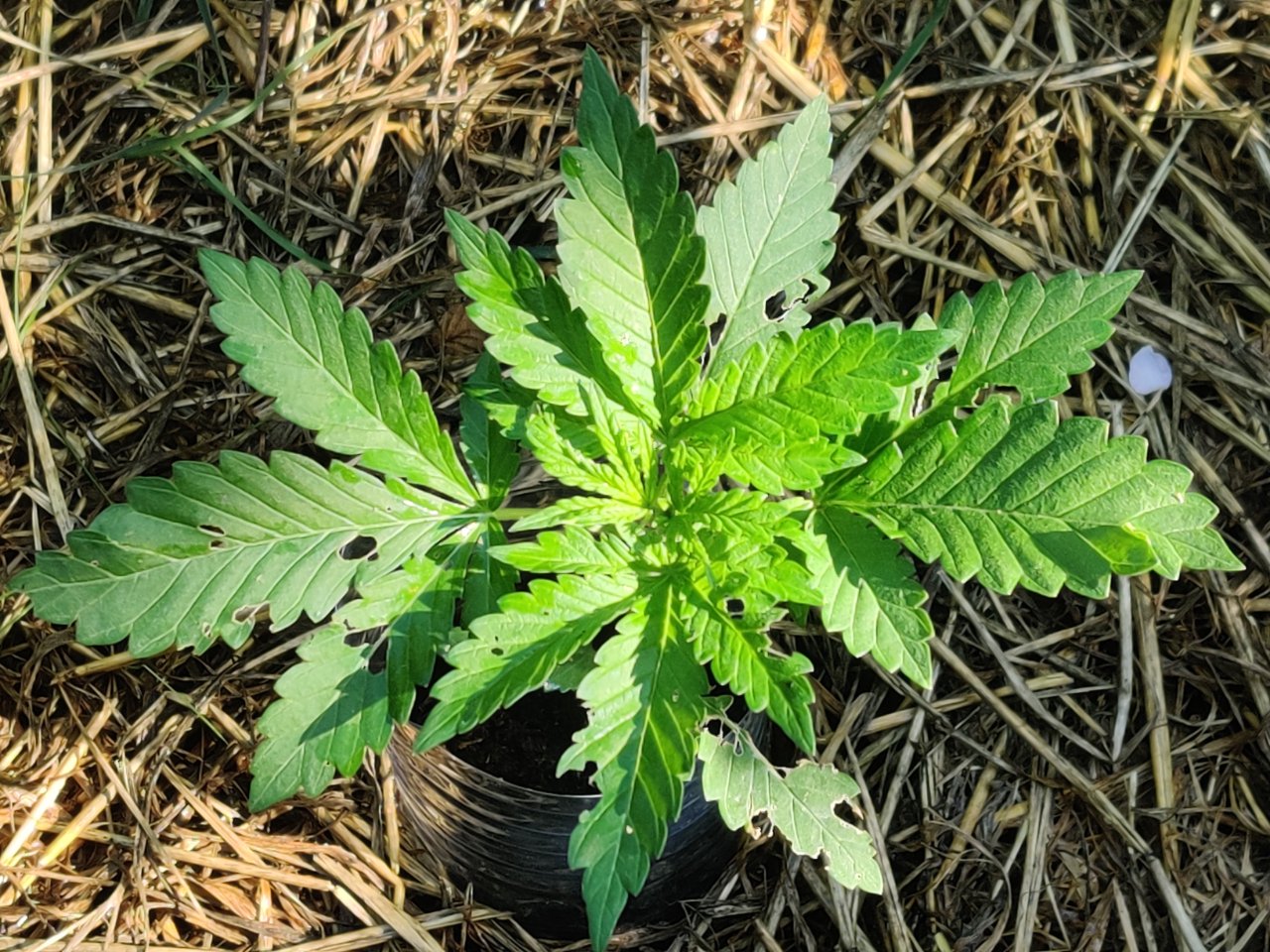
The plant looks fuller and greener than before, while chewing scars remain as leftover damage that still needs one final verification check.
Observation
21 June 2026
- Plant
- Cannabis (RQS Gushers)
- Health
- 🙂 Improving
- Momentum
- Growing well
- Case decision
- No Case Change
Visual evidence
What Dud2Bud observed
The plant looks more vigorous and fuller, which is encouraging. Chewing scars remain, but this frame does not clearly show a fresh escalation, so the sensible move is to verify whether the damage has stabilized.
Center growth is bright and active
Plant is fuller than the previous photo
Main stem and canopy remain upright
Chewing holes are still visible on multiple leaves
Outer leaves still show tissue loss
Damage has not fully disappeared
Old damage
Older holes and edge loss that were already present before
Old damage
Residual cosmetic leaf scars on lower or older foliage
Still uncertain
It is not obvious whether the barrier or exclusion step was actually kept in place
Still uncertain
Fresh damage versus unchanged old holes cannot be proven from one photo alone
Dud2Bud decision
Confirm chewing has stopped
The plant looks better overall, but the remaining chewing scars mean the important question is whether the feeding is truly over.
What to do
Keep care steady and verify
Do not change the plant care today. Keep any barrier or protected placement in place, and use the next comparison photo to check whether fresh chewing is still happening.
- 1 Leave the setup unchanged today.
- 2 Keep the barrier or protected placement in place.
- 3 Compare the next photo for new chewing on the newest leaves.
Exact change
No new change today; keep the current protection and normal care steady.
Keep steady
Keep watering, light, and placement unchanged; do not prune healthy growth just because old chew marks remain.
Check your own plant
Does your plant look similar?
Upload one photo. Dud2Bud looks at the visible symptoms, growing setup and recent changes, then gives you a practical first step.
First report free · No app required
Full assessment
How this photo was assessed
The report separates visible facts, possible explanations and the final care decision so uncertainty remains visible.
Visible evidence What was visible in the photo
Vigor
ClearGeneral vigor is good enough that the plant is not in emergency decline.
Confidence: 84%
Color Analysis
ClearLeaf color supports healthy growth rather than systemic stress.
Confidence: 89%
Growth Development
ImprovingThe plant is still moving forward in early vegetative growth.
Confidence: 93%
Progress Comparison
ImprovingMomentum is positive for the plant, even though the chewing scars remain.
Confidence: 78%
Damage Classification
WatchChewing injury is still part of the story, but it does not appear to be actively accelerating in this photo.
Confidence: 91%
Distribution Analysis
WatchThe plant has lingering herbivory damage, but the newest tissue is still relatively protected.
Confidence: 86%
Possible mechanisms What could explain it
Disease
Not VisibleDisease is not supported by the visible pattern.
Confidence: 80%
Nutrition
ClearNothing here strongly points to a nutrition issue.
Confidence: 51%
Environment
WatchThe environment still allows repeat chewing pressure, so protection remains relevant.
Confidence: 83%
Biotic Damage
ConcernA chewing pest or animal is still the most plausible cause of the tissue loss.
Confidence: 89%
Water Relations
ClearWater status does not look like the main limiter right now.
Confidence: 58%
Structural Analysis
ClearThe plant is structurally fine and can keep recovering if new feeding stops.
Confidence: 83%
Decision checks Why this action was chosen
Recovery
ImprovingThe plant itself is recovering in vigor, though the damage source is not fully resolved visually.
Confidence: 76%
Information Gap
WatchThe next photo should focus on whether new holes appear on the newest leaves.
Confidence: 80%
Limiting Factor
WatchThe main risk is repeat feeding, not internal plant collapse.
Confidence: 75%
Confidence Audit
WatchConfidence is enough to keep verifying, but not enough to resolve the case yet.
Confidence: 74%
Intervention Evaluation
ImprovingContinue checking rather than changing the plan again today.
Confidence: 70%
Case reasoning
Cases tracked in this report
Verifying
Chewing damage / herbivory stress
What comes next: Confirm in the next comparison that no fresh chewing appears on new growth.
Check your own plant
Does your plant look similar?
Upload one photo. Dud2Bud looks at the visible symptoms, growing setup and recent changes, then gives you a practical first step.
First report free · No app required
This supporting report documents the visual evidence and care decision from one point in a longer plant journey. It is not indexed separately from the main plant story.