Autoflower Cannabis in a LetPot: Air Gap and Droop Recovery
New air gap, active growth
The plant is fuller and upright after the waterline was lowered, but the adjustment is too recent to verify and older damage remains residual.
Observation
6 December 2025
- Plant
- Autoflower cannabis
- Health
- 🌱 Recovering - recent root-zone change needs time
- Momentum
- Growth is continuing
- Case decision
- No Case Change
Visual evidence
What Dud2Bud observed
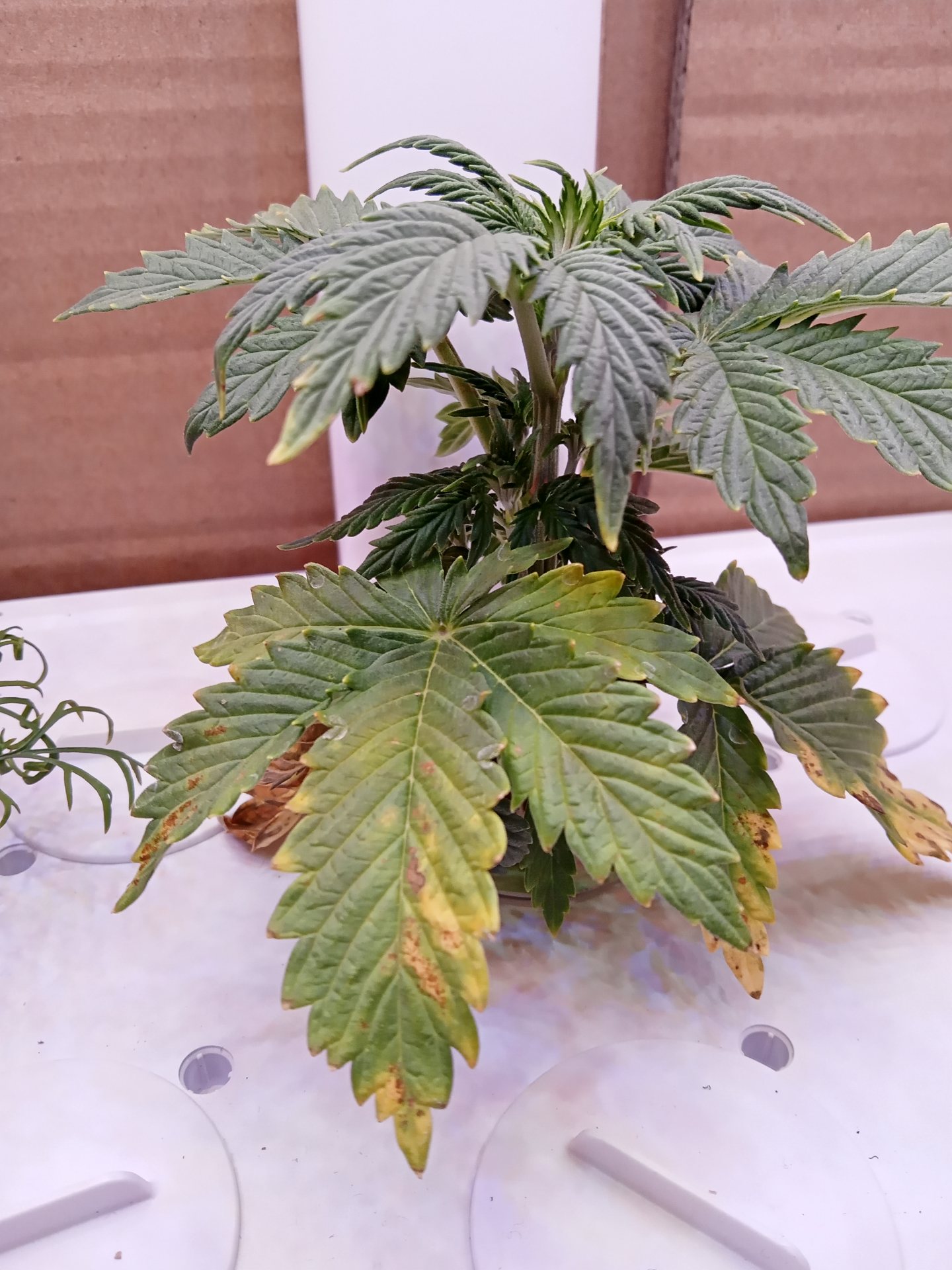
The plant is visibly larger and still producing active top growth. Most severe discoloration remains on older foliage, while the recent air-gap adjustment has not had enough time for a fair biological response assessment.
The upper canopy is larger than in the previous photo.
The main stem remains upright and supports substantial new growth.
The top leaves are still developing and are not broadly necrotic.
The plant has continued vegetative growth despite the earlier setback.
Older lower leaves show extensive yellowing, browning, and necrotic patches.
Some current leaves have yellowing along edges and tips.
The canopy still has some downward leaf angle.
The waterline and roots are not visible.
Old damage
Severely browned lower leaves that were already damaged before the recent waterline change.
Old damage
Existing necrotic patches and brown tips that cannot reverse.
Still uncertain
Only 14.6 hours have passed since the previous photo and the reported waterline adjustment.
Still uncertain
The current photo has different lighting and framing.
Still uncertain
It is unclear whether yellowing on middle leaves is new or previously present.
Still uncertain
The final nutrient strength after the half-strength top-up is unknown.
Dud2Bud decision
Let the lowered waterline settle
The root-zone air gap was just changed, so another nutrient or water adjustment would make the next comparison harder to interpret.
What to do
Hold the new waterline steady
Do not add nutrients, dilute the reservoir, or change the waterline again today. The air-gap adjustment is too recent to judge, and the active top growth is still viable.
- 1 Leave the waterline at its newly lowered position.
- 2 Do not add A/B or supplements.
- 3 Wait for a meaningful comparison window before making another reservoir change.
Exact change
none
Keep steady
Keep the lowered waterline, current half-strength solution, light schedule, and airflow unchanged.
Check your own plant
Does your plant look similar?
Upload one photo. Dud2Bud looks at the visible symptoms, growing setup and recent changes, then gives you a practical first step.
First report free · No app required
Full assessment
How this photo was assessed
The report separates visible facts, possible explanations and the final care decision so uncertainty remains visible.
Visible evidence What was visible in the photo
Vigor
ImprovingCurrent vigor is better in the active growth than in the older leaves.
Confidence: 75%
Color Analysis
WatchColor remains mixed. It is too soon to decide whether the half-strength solution is too weak, too strong, or simply being processed after prior root stress.
Confidence: 70%
Growth Development
ImprovingVegetative development is continuing despite residual damage.
Confidence: 86%
Progress Comparison
ImprovingThe visual direction remains positive, but the recent root-zone change is too new to verify.
Confidence: 78%
Damage Classification
WatchThe plant is still recovering, but fresh growth should be checked for any new tip burn or yellowing over a longer interval.
Confidence: 72%
Distribution Analysis
ImprovingThe dominant pattern is recovery from earlier stress rather than a confirmed new whole-plant collapse.
Confidence: 80%
Possible mechanisms What could explain it
Disease
WatchRoot disease cannot be ruled out, but current evidence does not justify treatment while new growth remains active.
Confidence: 48%
Nutrition
WatchNutrition may still be imperfect, but changing strength again now would confound the recent air-gap adjustment.
Confidence: 53%
Environment
WatchEnvironmental demand may affect posture and color, but no environmental change should be added during this short verification window.
Confidence: 50%
Biotic Damage
ClearPests are not the leading explanation.
Confidence: 77%
Water Relations
WatchThe adjustment may improve root oxygen, but the plant needs more than a few hours before its effect can be judged.
Confidence: 62%
Structural Analysis
ImprovingStructural function is adequate and does not need intervention today.
Confidence: 76%
Decision checks Why this action was chosen
Recovery
ImprovingRecovery remains the best overall interpretation, but the recent air-gap change is not yet verified.
Confidence: 82%
Information Gap
WatchMore evidence would help if new growth worsens, but it would not change today's decision to wait.
Confidence: 72%
Limiting Factor
WatchNo single active limitation is clear enough to justify another correction today.
Confidence: 56%
Confidence Audit
ImprovingConfidence is good for continued recovery monitoring and low-change care, but not for declaring the root-zone adjustment successful.
Confidence: 80%
Intervention Evaluation
UnknownThe waterline adjustment should be held steady rather than judged or followed by another change immediately.
Confidence: 72%
Check your own plant
Does your plant look similar?
Upload one photo. Dud2Bud looks at the visible symptoms, growing setup and recent changes, then gives you a practical first step.
First report free · No app required
This supporting report documents the visual evidence and care decision from one point in a longer plant journey. It is not indexed separately from the main plant story.