Autoflower Cannabis in a LetPot: Air Gap and Droop Recovery
Autoflower cannabis can grow successfully in a LetPot, but the reservoir level and nutrient strength need close attention. In this case, the plant developed heavy drooping, curled leaves and tip burn before recovering after the solution was reset to quarter strength and a clear air gap was restored beneath the net pot.
- Plant
- Autoflower cannabis
- Growing method
- LetPot countertop hydroponic system
- Main case
- Water access / oxygen balance stress
- Outcome
- Resolved
The plant and the question
What happened in this timeline?
Normal development
Before the problem
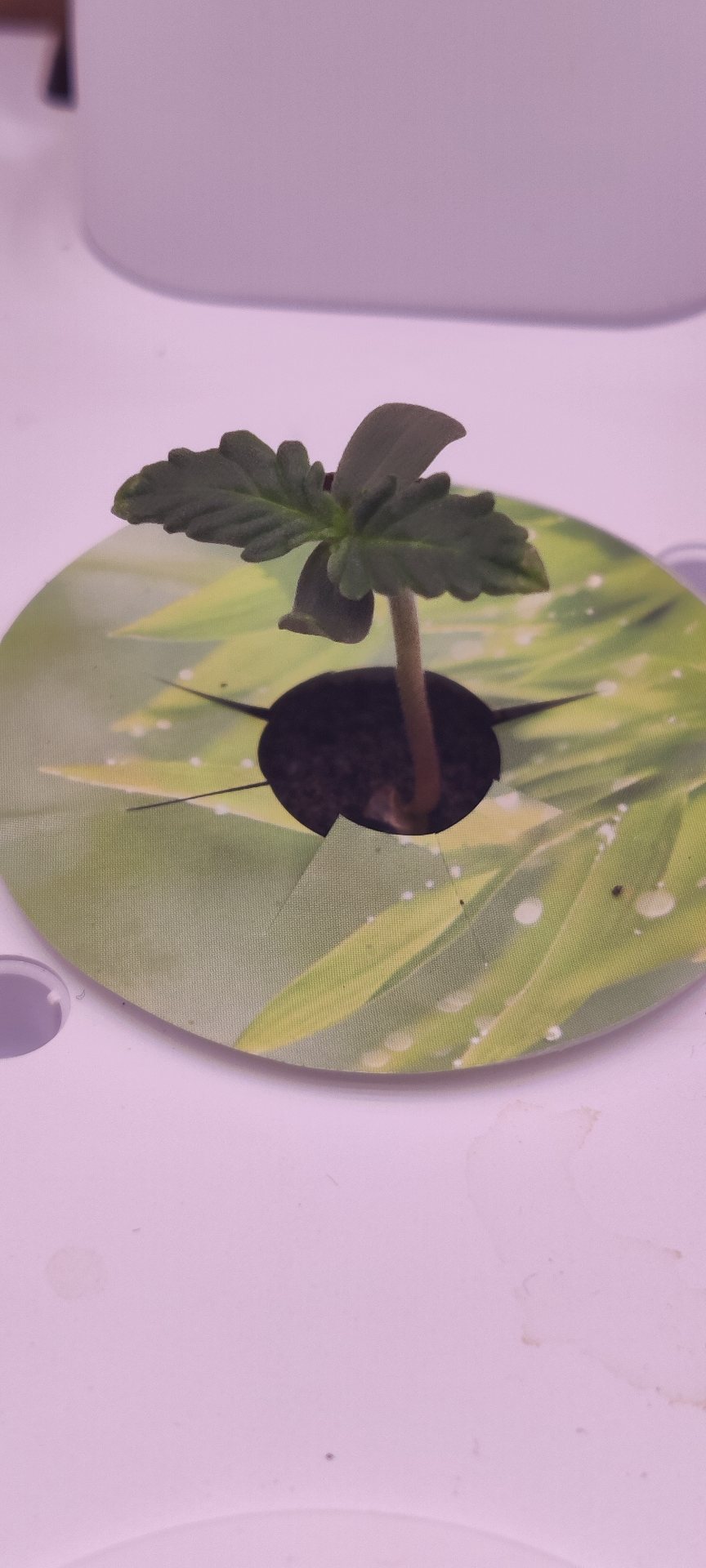
Day 1 contains 1 observation recorded before the main case began. The first journal entry shows a mostly healthy young plant with mild stem stretching and one localized lower-leaf concern.
Baseline established
The first journal entry shows a mostly healthy young plant with mild stem stretching and one localized lower-leaf concern.
The main case
Water access / oxygen balance stress
Days 9–13 contains the main diagnostic and intervention sequence. After the reservoir was reset to one-quarter strength, new growth looks greener and less curled, while older leaves continue to decline; the case remains in verification.
Growth continued, posture worsened
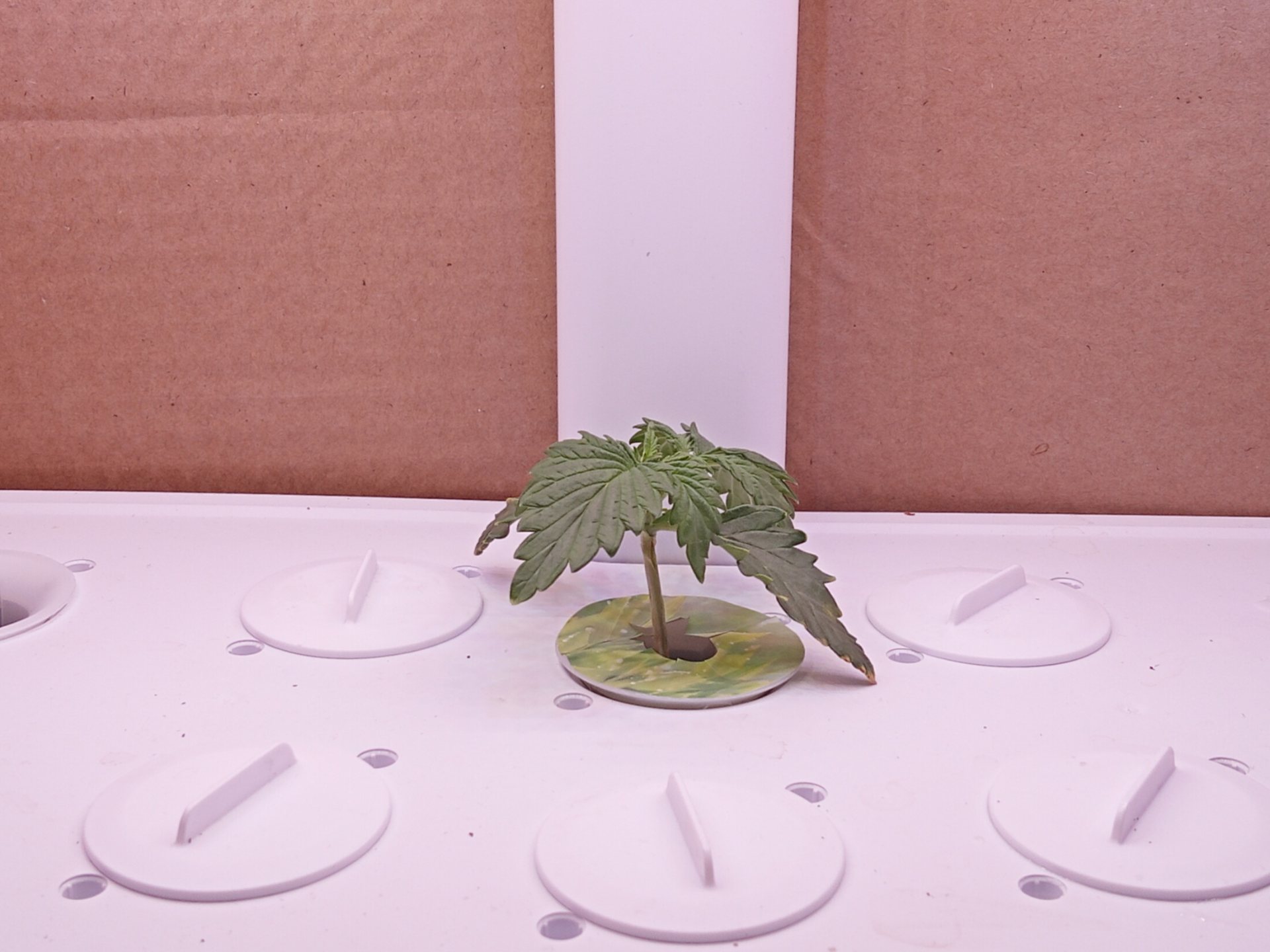
The canopy expanded since baseline, but broad droop appeared across the plant, so a root-zone water and oxygen balance case was opened and one reservoir-level test was selected.
Growth has continued, but posture has worsened from upright to broadly drooping. The strongest actionable hypothesis is root-zone water or oxygen balance in this lid-supported hydro setup, although the exact mechanism is not confirmed.
Check the reservoir and adjust the solution level so it sits just below the bottom of the net pot or support, keeping a visible air gap rather than submerging the stem or entire medium.
Topped up + added 5ml A/B each.
Fresh feed change meets active stress
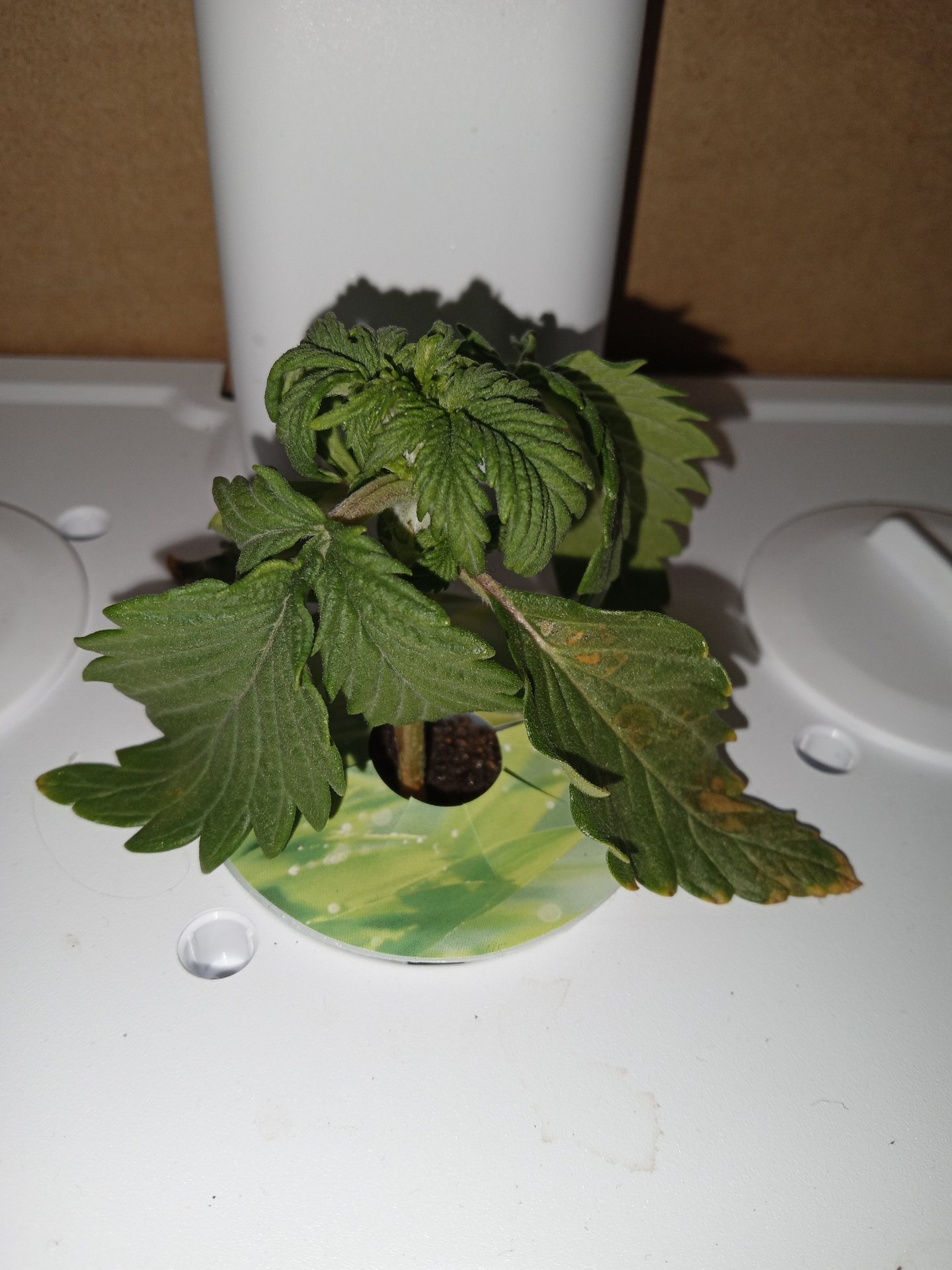
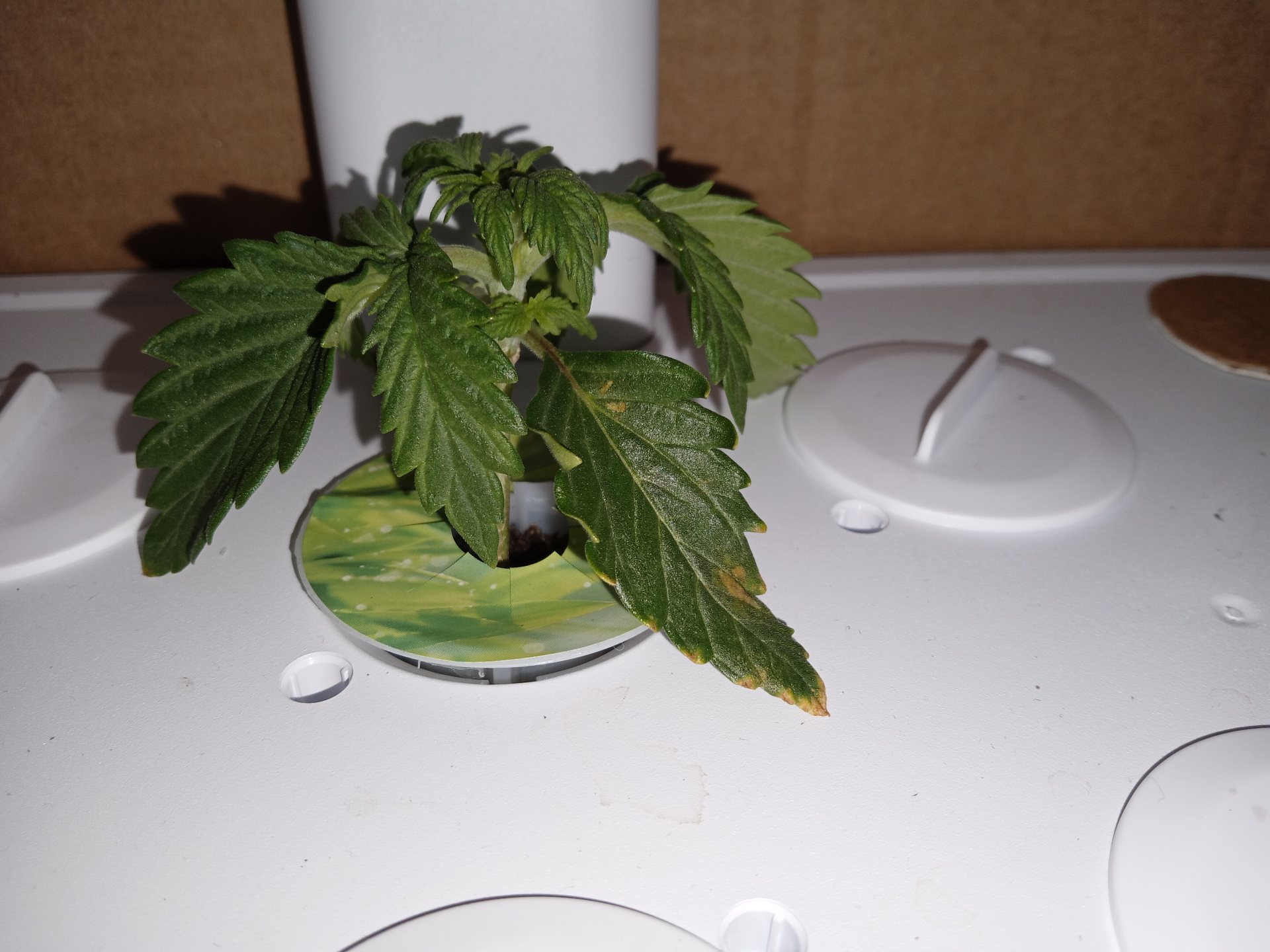
The prior reservoir adjustment was not performed; instead, the reservoir was topped up and fed with 5 ml of each A/B, while dark curl, droop, and tip burn are now visible.
The plant is still growing, but posture has not improved and the new dark curl with tip burn makes excess nutrient strength more plausible than it was yesterday. The safest next test is dilution without adding another variable.
Replace part of the current reservoir solution with plain water, using a conservative partial dilution, then leave the nutrient level unchanged for the next 24 hours.
The pending correction is still needed
The plant remains broadly drooped and the center is more curled, while the recommended dilution was not performed and therefore cannot be verified.
The plant has not improved over the last 24 hours and appears more tightly curled. Because the confirmed dilution was not done, nutrient strength remains an untested and actionable factor, with root-zone balance still unresolved.
Replace about one-third of the current reservoir with plain water now, then add no A/B nutrients for at least 24 hours.
Reset the reservoir to 1/4 recommended strength.
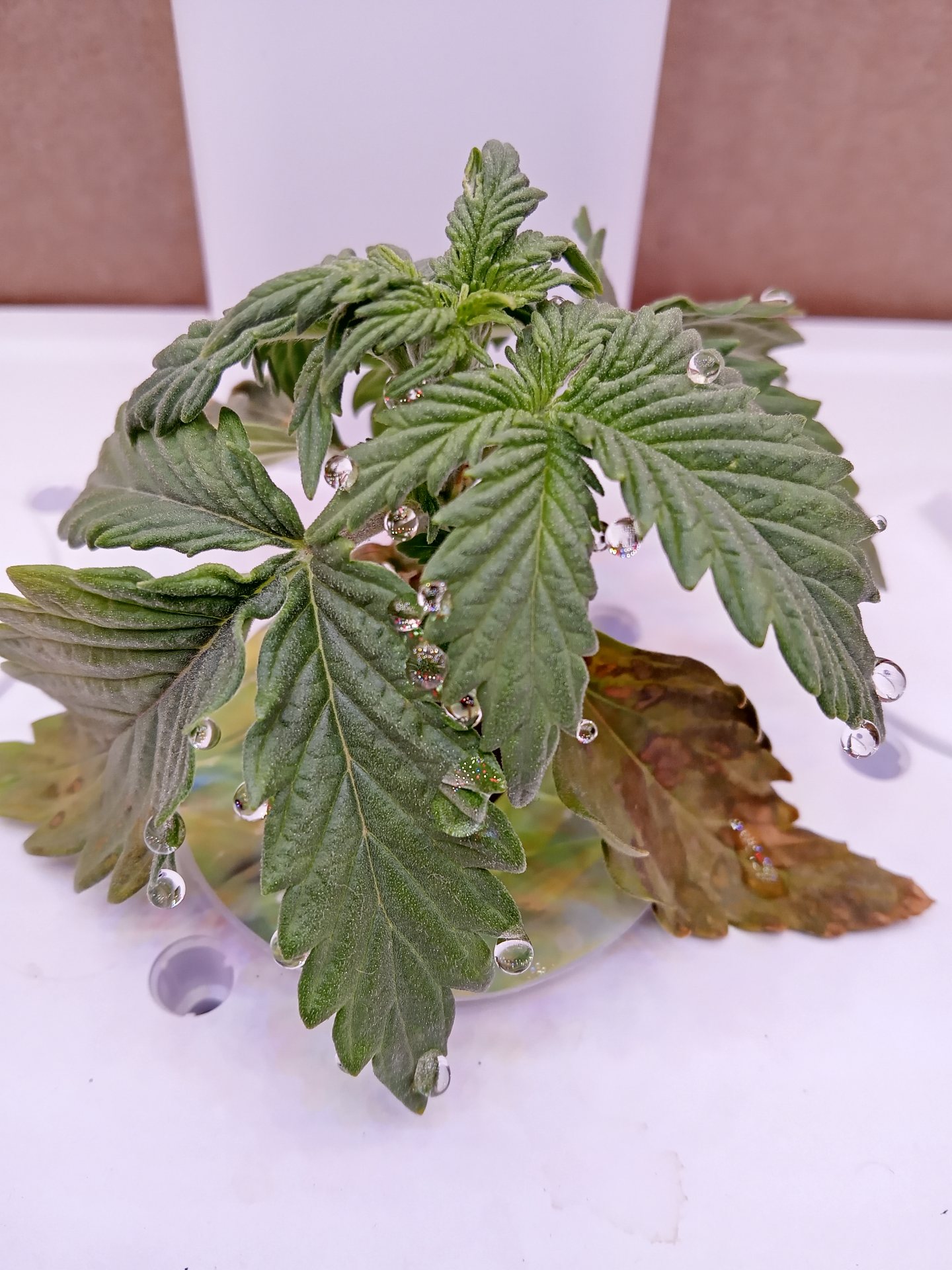
The reset appears partly helpful
After the reservoir was reset to one-quarter strength, new growth looks greener and less curled, while older leaves continue to decline; the case remains in verification.
The plant still carries substantial old damage, but the newest growth appears less tightly curled and healthier after the low-strength reservoir reset. This supports partial improvement rather than a need for another immediate chemical change.
Do not add more A/B or make another reservoir change today. The newest growth looks better after the reset, so give that response a clean comparison window.
Check your own plant
Does your plant look similar?
Upload one photo. Dud2Bud looks at the visible symptoms, growing setup and recent changes, then gives you a practical first step.
First report free · No app required
Later development
What happened afterwards
Days 16–71 contains 5 follow-up observations after the case episode. Over the long interval, early flower sites became several developed clusters. The plant is progressing in flowering, with moisture inspection now the main prevention focus.
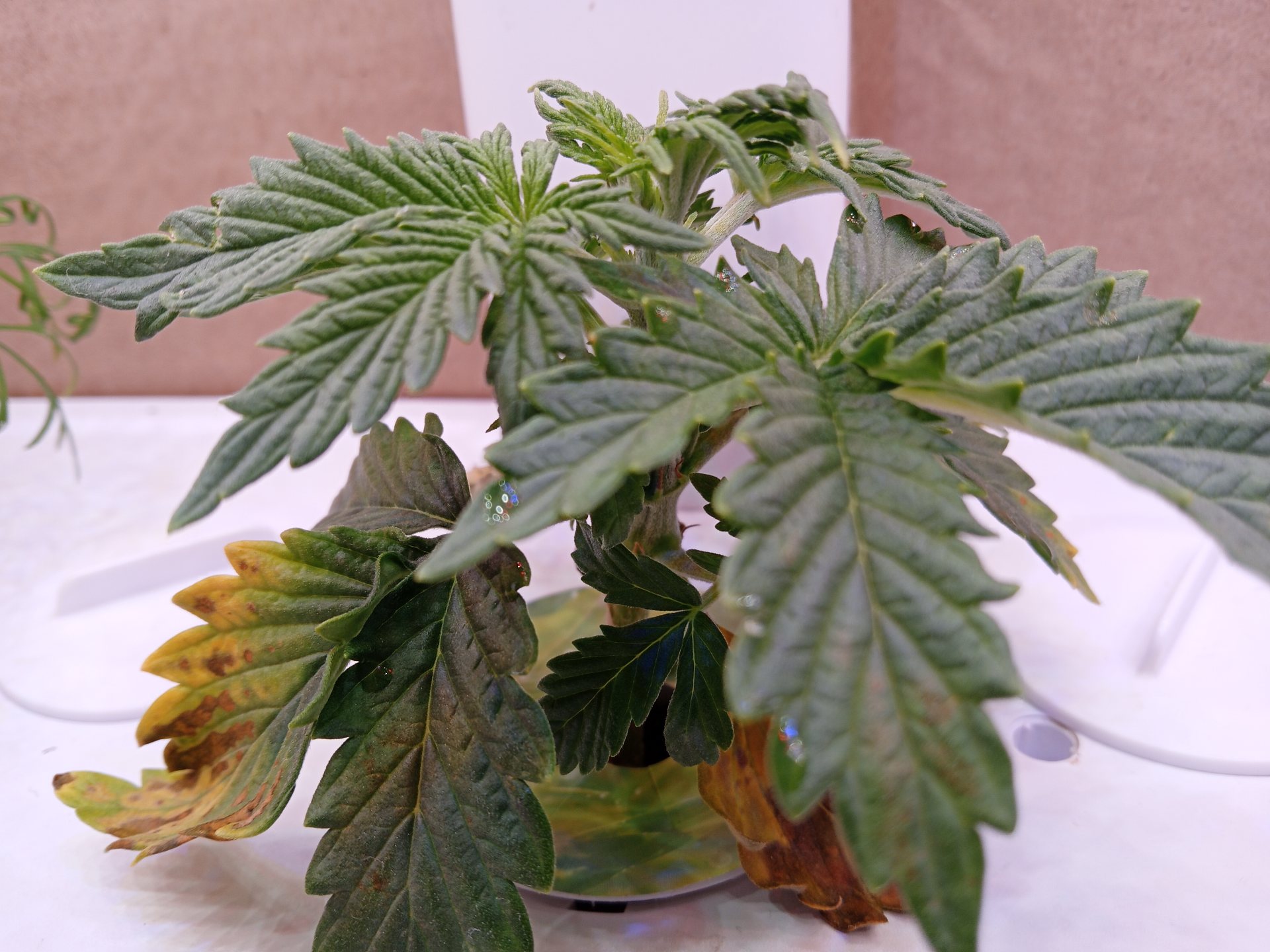
Recovery is holding
New upper growth expanded and stayed healthier while older damaged leaves continued to fade, supporting a stable-care recovery plan.
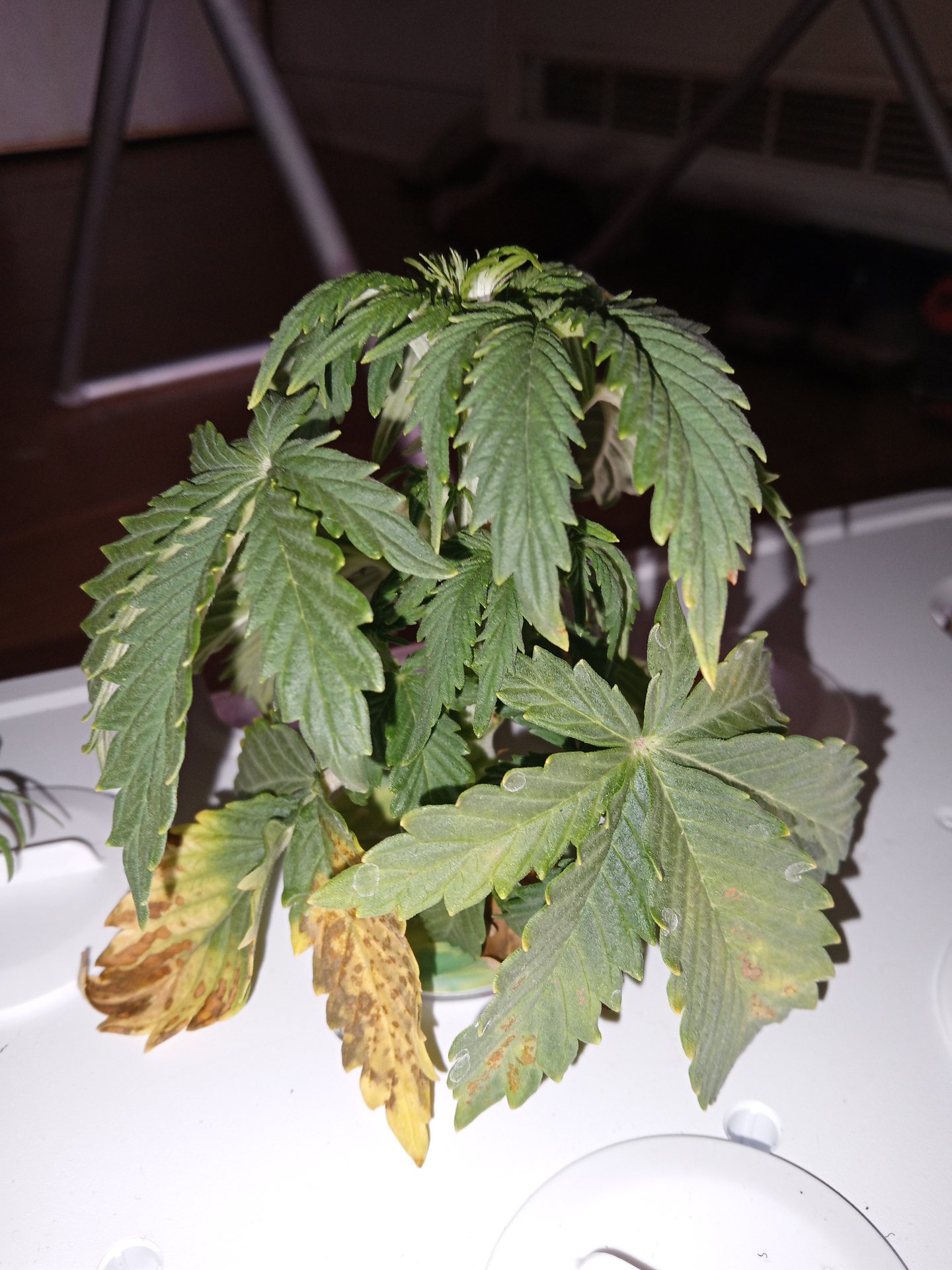
The canopy keeps rebuilding
The plant is fuller and more upright than before, while older damage continues to fade after a recent half-strength reservoir top-up.
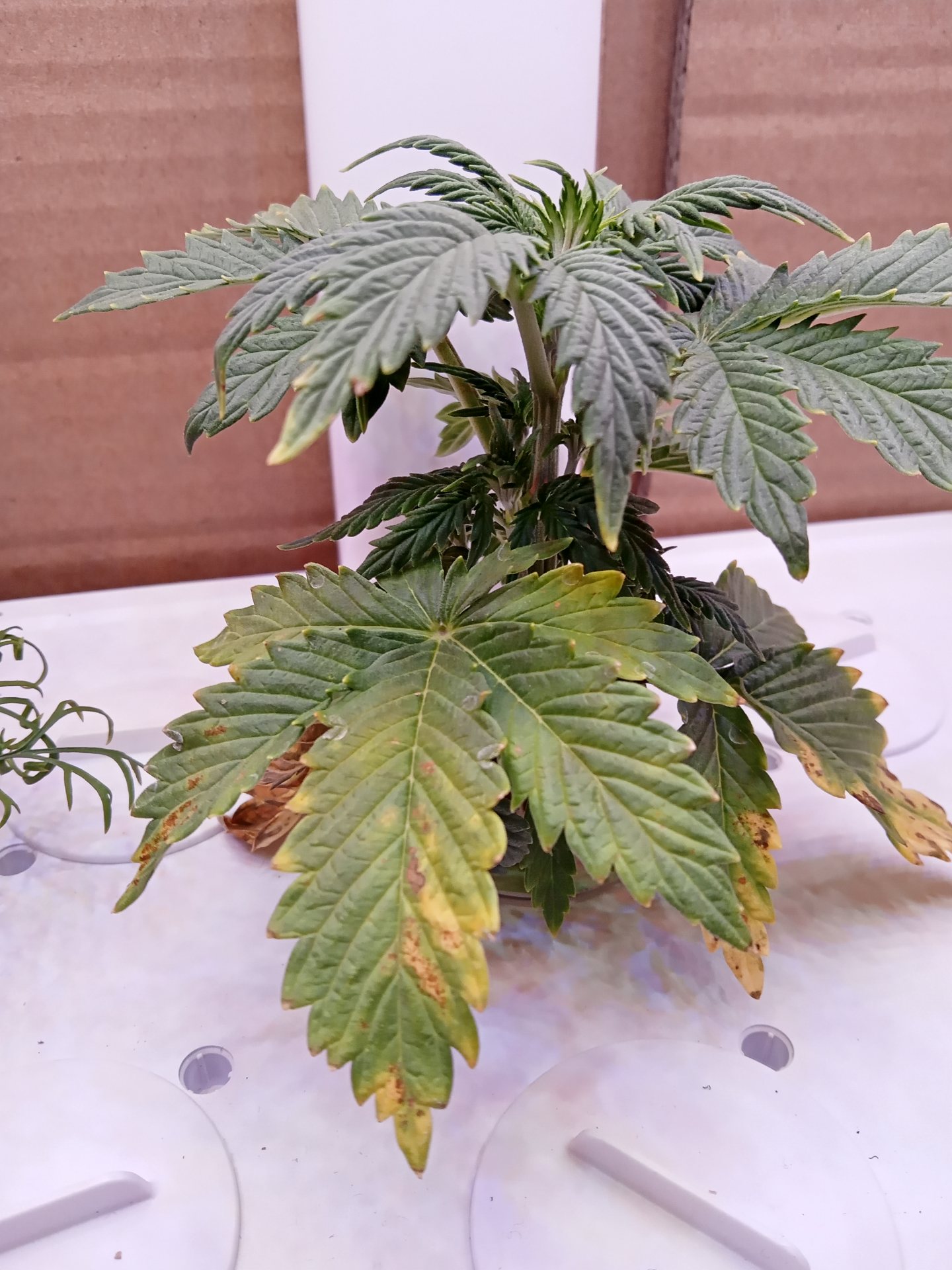
New air gap, active growth
The plant is fuller and upright after the waterline was lowered, but the adjustment is too recent to verify and older damage remains residual.
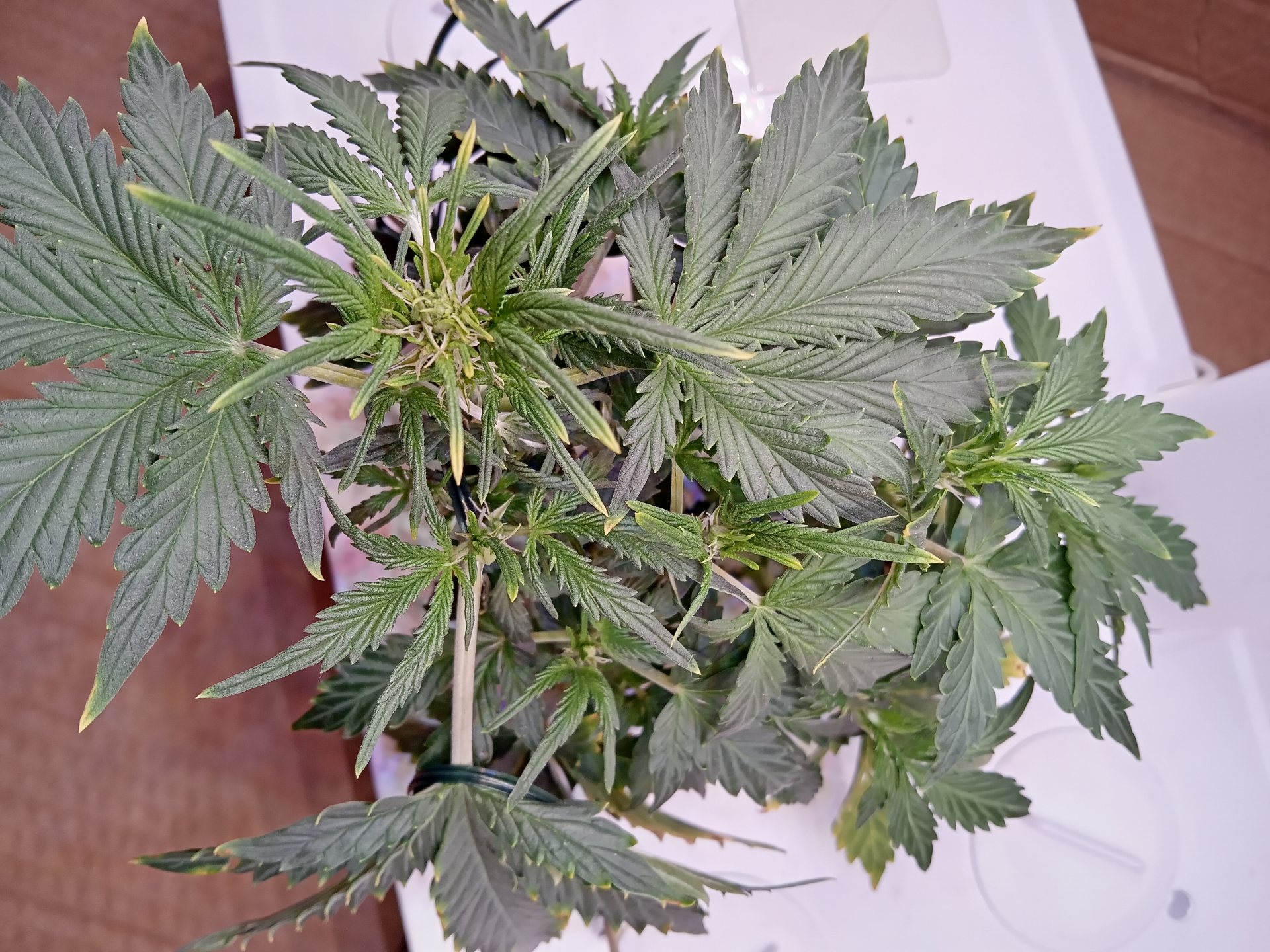
First flowers appeared
The plant has reached a clear flowering milestone, with multiple visible pistil-bearing sites and continued canopy development.
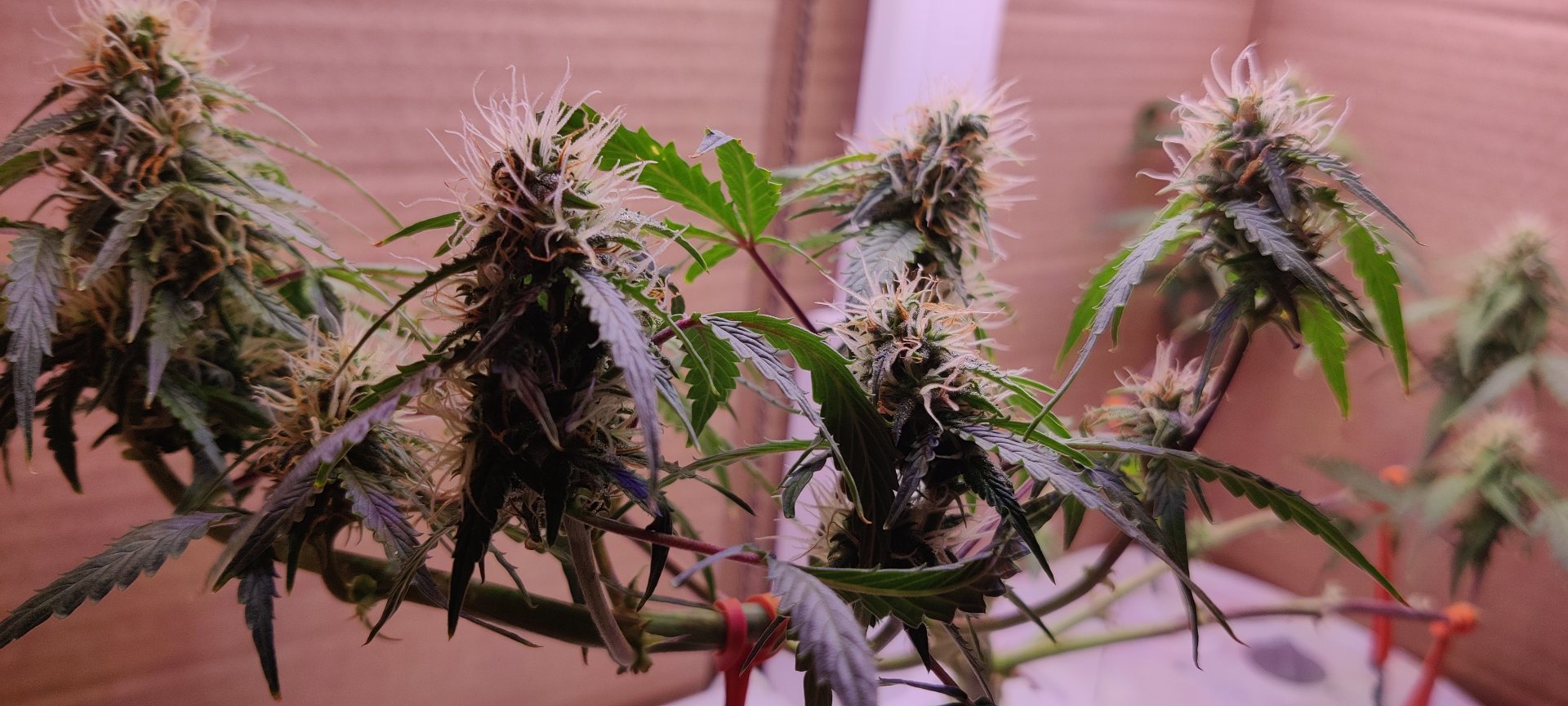
Flower clusters developed
Over the long interval, early flower sites became several developed clusters. The plant is progressing in flowering, with moisture inspection now the main prevention focus.
Evidence-based conclusion
What this case suggests
Practical takeaway
What another grower can do
Every included observation
Full plant timeline
Open a detailed report to see the evidence, Dud2Bud’s decision and the exact recommendation from that point in the journey.
Day 1 · Baseline established
The first journal entry shows a mostly healthy young plant with mild stem stretching and one localized lower-leaf concern.
Day 9 · Growth continued, posture worsened
The canopy expanded since baseline, but broad droop appeared across the plant, so a root-zone water and oxygen balance case was opened and one reservoir-level test was selected.
Day 10 · Fresh feed change meets active stress
The prior reservoir adjustment was not performed; instead, the reservoir was topped up and fed with 5 ml of each A/B, while dark curl, droop, and tip burn are now visible.
Day 11 · The pending correction is still needed
The plant remains broadly drooped and the center is more curled, while the recommended dilution was not performed and therefore cannot be verified.
Day 13 · The reset appears partly helpful
After the reservoir was reset to one-quarter strength, new growth looks greener and less curled, while older leaves continue to decline; the case remains in verification.
Day 16 · Recovery is holding
New upper growth expanded and stayed healthier while older damaged leaves continued to fade, supporting a stable-care recovery plan.
Day 21 · The canopy keeps rebuilding
The plant is fuller and more upright than before, while older damage continues to fade after a recent half-strength reservoir top-up.
Day 22 · New air gap, active growth
The plant is fuller and upright after the waterline was lowered, but the adjustment is too recent to verify and older damage remains residual.
Day 31 · First flowers appeared
The plant has reached a clear flowering milestone, with multiple visible pistil-bearing sites and continued canopy development.
Day 71 · Flower clusters developed
Over the long interval, early flower sites became several developed clusters. The plant is progressing in flowering, with moisture inspection now the main prevention focus.
Check your own plant
Does your plant look similar?
Upload one photo. Dud2Bud looks at the visible symptoms, growing setup and recent changes, then gives you a practical first step.
First report free · No app required
This page documents one real plant timeline. Visual interpretation and later outcomes may support a likely explanation without proving that one factor was the sole cause. Dud2Bud guidance is designed around cautious, reversible plant care.